AI Glasses: A Deep Dive into the Next Computing Platform (2025 Comprehensive Report)

This report provides a comprehensive analysis of the AI Glasses landscape, from market trends and historical context to the competitive ecosystem and the search for a killer application that will propel this technology into the mainstream.
AI Glasses: A Deep Dive into the Next Computing Platform (2025 Comprehensive Report)
Document Update Time: December 2025
Quick Navigation / Table of Contents
- Part 1: Introduction - The Vision for AI Glasses
- Part 2: Macro Market Size and Key Trends
- Part 3: Historical Development Timeline (2012-2024)
- Part 4: Detailed Classification and Competitive Landscape
- Part 5: Strategic Deep Dive: Meta vs. Apple
- Part 6: The Quest for the "Killer Application"
- Part 7: Core Technologies, Bottlenecks, and Future Outlook
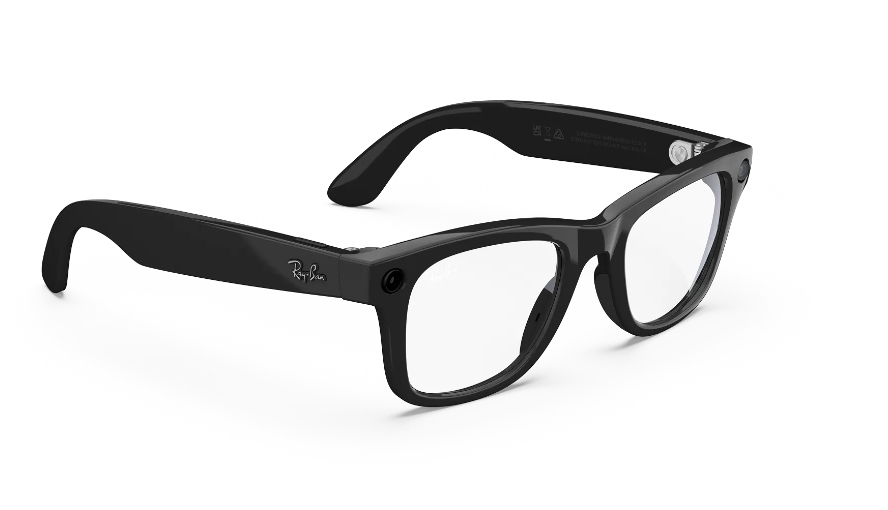
Part 1: Introduction - The Vision for AI Glasses
Poised at the intersection of artificial intelligence and wearable technology, AI Glasses (or Smart Glasses) are widely regarded as the most promising candidate to succeed the smartphone as the next-generation personal computing platform. Their unique advantages—a first-person perspective, proximity to auditory and vocal interfaces, and high social acceptability—make them the ideal physical vessel for AI to perceive, interact with, and augment our reality. In this report, AISOTA.com provides a comprehensive analysis of the AI Glasses landscape, from market trends and historical context to the competitive ecosystem and the search for a killer application that will propel this technology into the mainstream.
Part 2: Macro Market Size and Key Trends
The smart glasses market is transitioning from a nascent, niche field into a dual-engine growth model, driven by steady enterprise adoption and the imminent explosion of the consumer sector. The market is shifting from "B-side driven" to a "B-side stable, C-side explosive" dual-engine model.
Market Scale & Projections
According to data from institutions like Statista, the overall smart glasses market was valued at approximately $20 billion in 2023. Projections estimate the market will reach a valuation between $55 billion and $80 billion by 2030, representing a Compound Annual Growth Rate (CAGR) of around 20%. The enterprise segment currently constitutes the majority of this market (over 60%), but the consumer segment, with an estimated AR headset shipment of 500,000 units in 2023 (IDC), holds the key to exponential future growth. Multiple agencies predict that consumer AR glasses shipments could exceed tens of millions of units by 2030, approaching the scale of the early iPad market.
Five Core Development Trends
- AI-AR Fusion: Generative AI is becoming the "brain" and AR the "eyes," transforming glasses from passive display tools into intelligent agents that understand context and proactively assist users. This is the most significant narrative shift since 2023.
- Form Factor Divergence: Task-specific glasses (e.g., lightweight notification glasses for logistics) and all-day general-purpose glasses (e.g., full-featured AR glasses) will coexist to serve different needs and price points.
- Ecosystem Warfare: Competition is shifting from hardware specs to the strength of developer ecosystems and cross-device integration, pitting players like Apple (with its closed-loop iOS ecosystem) and Meta (with its open Android-based approach) against each other.
- Price Democratization: Advancements in optical solutions (especially waveguide yield improvements) and specialized chip manufacturing (like the Qualcomm Snapdragon AR1) are expected to drive consumer AR glasses prices down from the current $350-$550 range into the mainstream price range of $200-$350 within 3-5 years.
- Asia-Pacific as Growth Engine: With strong consumer electronics markets, advanced 5G infrastructure, and a high acceptance of new technologies, the APAC region, particularly China, is projected by Counterpoint Research to become the largest and fastest-growing consumer market for smart glasses.
Part 3: Historical Development Timeline (2012-2024)
The journey of AI glasses is a story of ambitious vision, early missteps, and steady technological maturation, marked by a clear evolution in market focus and core technology.
| Year | Key Event / Product | Significance & Impact |
|---|---|---|
| 2012 | Google Glass Explorer Edition | Ignited global interest but failed commercially due to privacy concerns, high price ($1,500), and lack of applications. A crucial cautionary tale about social acceptance. |
| 2015 | Microsoft HoloLens 1 | Pioneered "Mixed Reality" for enterprise, shifting focus from simple information overlay to true spatial computing. Established B2B as a viable market. |
| 2019 | HoloLens 2 Released | Solidified enterprise AR's value with improved UI, wider FOV, and deep integration with Azure cloud services, demonstrating clear ROI for industries. |
| 2021 | Meta Ray-Ban Stories | Marked a strategic shift to fashion-first consumer wearables. Prioritizing audio and capture over display to test the market and avoid past pitfalls. |
| 2022 | Rise of Consumer AR (e.g., XREAL Air) | The "portable big screen" concept, powered by the mature BirdBath optics, made AR glasses accessible and useful for consumers (video/gaming) for the first time. |
| 2023 | Ray-Ban Meta with Multimodal AI | The turning point. Generative AI integration transformed glasses into a perceptual AI device capable of real-time visual Q&A, starting a new narrative for the industry. |
| 2024 | OPPO Air Glass 3 Concept & Qualcomm AR1 Chip | Demonstrated the feasibility of all-in-one glasses approaching a standard form factor. Dedicated chips paved the way for lighter, more efficient standalone devices. |
Part 4: Detailed Classification and Competitive Landscape
The AI glasses market is not monolithic. It has fragmented into five distinct categories, each with its own technology, target audience, and key players.
4.1 AI Assistant Glasses (Audio & Interaction-First)
These screenless glasses act as an extension of an AI assistant, prioritizing voice interaction, open-ear audio, and visual input for AI. The goal is hands-free, always-on AI assistance.
| Product | Core Feature & AI Capability | Key Selling Point & Price |
|---|---|---|
| Ray-Ban Meta | Multimodal Meta AI (visual Q&A), high-quality camera for POV capture, seamless social sharing. | Fashion-forward design meets powerful, integrated AI for real-world queries and content creation. (Starts at $299) |
| Huawei Eyewear | High-quality open-ear audio, seamless integration with Huawei's HarmonyOS ecosystem, basic voice assistant. | A stylish audio accessory for existing Huawei users, focusing on calls and music with long battery life. (Starts around $350) |
| Amazon Echo Frames | Hands-free access to Alexa, notifications, calls, and music. Focus is on extending the Alexa ecosystem. | For users deeply embedded in the Amazon Alexa ecosystem, providing ubiquitous voice control. (Starts at $269) |
4.2 Consumer AR Display Glasses (Visual & Entertainment-First)
These glasses feature a transparent display to overlay digital information, currently dominated by the "portable private cinema" use case. They require a connection to a phone or other device.
| Product | Display Tech & Specs | Key Selling Point & Price |
|---|---|---|
| XREAL Air 2 | BirdBath optics, Sony Micro-OLED, 120Hz, 46° FOV | Market leader with good display quality, comfort, and a growing ecosystem of accessories like the Beam. (Starts at $399) |
| TCL RayNeo Air 2 | BirdBath optics, Sony Micro-OLED, 120Hz, 49° FOV | Leverages TCL's display manufacturing prowess to offer a competitive alternative with excellent audio-visuals. (Starts around $379) |
| Rokid Max | BirdBath optics, Micro-OLED, 120Hz, 50° FOV | Offers a wide field of view and partners with accessories like the Rokid Station to create a portable Android TV experience. (Starts at $439) |
4.3 Enterprise AR Display Glasses (Productivity Tools)
Built for work, these devices focus on productivity use cases like remote assistance, digital twin visualization, and guided workflows, prioritizing stability, security, and ecosystem integration.
| Product | Display Tech & Interaction | Key Selling Point & Price |
|---|---|---|
| Microsoft HoloLens 2 | Diffractive Waveguides, LCOS Display. Industry-leading hand and eye tracking. | Industry benchmark with superior tracking and deep integration with Microsoft's enterprise cloud (Dynamics 365, Azure). (Starts at $3,500) |
| Magic Leap 2 | Diffractive Waveguides, LCOS Display. Unique "Dynamic Dimming" for bright environments. | Features a larger field of view and dimming, targeting professional sectors like healthcare and defense. (Starts at $3,299) |
| Vuzix Ultralite | Proprietary Waveguides and micro-LED display. Lightweight design. | Focuses on ultra-lightweight, wearable designs for specific enterprise workflows like logistics and field service. (Price varies, OEM focus) |
4.4 All-in-One Standalone AR Glasses (The Holy Grail)
These devices integrate all computing, battery, and display components into a single, glasses-like form factor, aiming to be a true smartphone replacement. They are mostly in the prototype or early developer stage.
Core Challenge: The "Impossible Triangle"
The primary challenge for this category is balancing heat dissipation, battery life, and light weight. Products like the OPPO Air Glass 3 concept demonstrate significant progress, integrating powerful chips like the Qualcomm Snapdragon AR1 into a sub-50-gram body. However, achieving all-day battery life with robust performance for a mass-market product remains a future goal, likely 3-5 years away from commercial viability.
4.5 Camera/Capture Glasses (POV Recording)
These glasses are purpose-built for high-quality, hands-free first-person-view (POV) video and photo capture, serving as a wearable alternative to action cameras. Success depends on image quality and ease of content creation.
While models like Snap's Spectacles pioneered the social aspect, the market is currently best defined by the philosophy of products like the Insta360 GO 3. Though not a traditional glasses form factor, its modularity allows it to function as a POV camera. Its success highlights the importance of combining excellent image stabilization (FlowState) with a powerful AI-driven editing app ecosystem, which significantly lowers the barrier to creating compelling content.
Part 5: Strategic Deep Dive: Meta vs. Apple
The battle for the future of smart glasses is being defined by two starkly different philosophies, embodied by Meta's open, fashion-first approach and Apple's anticipated closed, experience-driven strategy. This mirrors the historic Android vs. iOS competition.
| Strategic Dimension | Meta: "Open Fashion, AI Driven" | Apple (Anticipated): "Closed Ecosystem, Experience First" |
|---|---|---|
| Core Goal | Become the gateway to the metaverse; capture market share and user data to fuel its social/ad ecosystem. | Define the next standard of spatial computing; create a new high-margin hardware category to extend its premium ecosystem. |
| Product Path | Iterative. Start with audio/camera glasses (Ray-Ban), then add display, then full AR. Build in public. | Revolutionary. Likely to wait until a complete, high-quality, all-in-one experience is possible before launching a mass-market product. |
| Ecosystem Strategy | Open collaboration. Partner with fashion brands; use Android base; court developers for Horizon OS. | Closed integration. Custom silicon (M/A-series chips), proprietary visionOS, tight control via the App Store. |
| Business Model | Affordable hardware, subsidized by data and advertising revenue. Hardware is the vehicle for data. | High-profit hardware sales, supplemented by app/service revenue. User privacy is a selling point. |
| Key Challenge | Overcoming severe privacy concerns and transitioning from a social media company to a trusted hardware platform. | Justifying a high price point with indispensable use cases and managing the immense technical complexity of a perfect product. |
Part 6: The Quest for the "Killer Application"
A "killer app" is a use case so compelling that it drives mass adoption of the hardware. The search for this app is the industry's most critical pursuit, as hardware alone is not enough.
| Category | Killer App Candidate | Value Proposition & Feasibility Analysis |
|---|---|---|
| AI Assistant | Global Real-time Conversation Translation | Value: Breaks language barriers for travel and business. Feasibility: High. Relies on mature cloud AI. Key challenges are latency (<500ms) and accuracy in noisy environments. |
| Consumer AR | Immersive Spatial Navigation | Value: Overlays directions onto the real world, eliminating the need to look at a phone. Feasibility: Medium. Requires high-precision SLAM and GPS, with major challenges in outdoor brightness and battery consumption. |
| Enterprise AR | Remote Expert Assistance | Value: Allows experts to see a frontline worker's POV and provide real-time guidance, saving costs. Feasibility: High. Already commercialized with clear ROI. Success depends on software integration and network stability. |
| All-in-One AR | Proactive Personal AI Agent | Value: A 24/7 AI that understands context and anticipates needs. Feasibility: Low (currently). Blocked by battery life, on-device AI power, and immense privacy hurdles. Represents the ultimate long-term vision. |
Part 7: Core Technologies, Bottlenecks, and Future Outlook
The realization of the AI glasses vision hinges on overcoming significant technological hurdles across multiple domains. The interplay between these factors will determine the pace and direction of the market.
Key Enabling Technologies
- Optical Systems: The battle between cost-effective BirdBath optics (for current consumer devices) and ultra-thin Waveguides (for enterprise and future consumer devices) defines the form factor and cost. Waveguide manufacturing yield and efficiency are key variables.
- Micro-displays: Micro-OLED is the current standard, offering great color and contrast. The future lies in higher-brightness, lower-power Micro-LED technology, which is critical for outdoor use but is still 3-5 years from mass production.
- System-on-Chip (SoC): Specialized chips like the Qualcomm Snapdragon XR/AR series are crucial for efficient on-device processing of SLAM and AI tasks, enabling the "split processing" architecture where glasses offload computation.
- Connectivity & Architecture: Low-latency Wi-Fi (6E/7) and 5G are essential for the split-processing architecture, where glasses act as a terminal connected to a phone or the cloud for heavy computation.
Critical Bottlenecks
- Battery & Power: Achieving all-day battery life (8+ hours of mixed use) without excessive weight or heat remains the single greatest challenge, blocking the path to a true smartphone replacement.
- Thermal Management: High-performance chips generate heat that is difficult to dissipate in a compact frame near the user's head. This limits the sustained performance of standalone glasses.
- Privacy & Social Acceptance: The "always-on" camera is a major societal hurdle. Clear indicators (like an un-hackable LED light) and robust, transparent privacy policies are non-negotiable for mass adoption.
- Content & App Ecosystem: Without compelling, unique applications, the hardware is just a novelty. Building a vibrant developer community and a pipeline of high-quality content is as important as the hardware itself.
Conclusion & Future Outlook
AI glasses are undeniably on a trajectory to become a transformative technology. The path forward will be gradual, likely following a progression from specialized, task-oriented devices (audio, filming, enterprise) to fully integrated, all-day wearable intelligent assistants. The convergence of increasingly powerful and efficient AI, maturing display technologies, and the strategic imperatives of tech giants creates a perfect storm for innovation. While significant challenges in power, privacy, and application development remain, the question is no longer 'if' AI glasses will become a mainstream platform, but 'when' and 'how' they will redefine our interaction with the digital and physical worlds.
This article was written by the author with the assistance of artificial intelligence (such as outlining, draft generation, and improving readability), and the final content was fully fact-checked and reviewed by the author.